
Spring Previous Resident Sources
One Spring address has several distinct trails. HCAD ties a current parcel to an appraisal owner or taxpayer record, while the Harris County Clerk records grantors and grantees in the deed chain. Old directories and the census can provide a household clue instead. No one of those records proves all of the others. Start with the current parcel identity, then keep the source type next to every name so the record does not overstate what it shows.
| Source | Years It Covers | Where Held | What It Shows |
|---|---|---|---|
| HCAD appraisal record | Current and prior online data | Harris County Appraisal District | Parcel account, appraisal owner or taxpayer, situs, mailing address, and legal description |
| Harris Clerk real-property index | Records reach back to 1837; online images from 11/1/1960 | Harris County Clerk | Grantor, grantee, filing data, instrument, and legal-description fields |
| TSLAC Harris deed materials | Deed record 1837-1886 and index reels | Texas State Library and Archives Commission | Earlier deed books plus direct and reverse indexes |
| Harris County Archives title holdings | Historical holdings, dates vary by item | Harris County Archives | Block books, title abstracts, and mid-1920s order books |
| Directories and census | Open Houston scans 1866-1923; full public census through 1950 | HPL, TSLAC, and library census access | Dated household and address clues, not title proof |
The Harris County Clerk public-records page identifies the county channels for older records, copy routes, and historical access.
Use the table as an era map. It helps prevent a current appraisal entry from being mistaken for proof of a past household.
Spring Previous Residents Start Here
Freeze the parcel identity before searching a surname. HCAD can return a 13-digit account, owner name, situs or physical address, owner mailing address, legal description, neighborhood, values, and links related to ownership history. The situs is the physical parcel. The mailing address is where appraisal notices go, and it can be a trust, entity, representative, or address in another city or state. Neither is a list of everyone who lived in the home.
Use the current account and legal description as the stable search keys. HCAD allows owner, legal-description, street-name, beginning and ending number, ZIP, and other advanced fields. Partial prefixes and case-insensitive searches can help with spelling variation. Its records generally refresh nightly, but HCAD says the data is not a title determination and can be wrong. A map boundary is approximate and not a survey.
For a Spring address near the county line, verify the county before searching. A Spring mailing address may require Montgomery County records rather than Harris County sources.
Spring Previous Residents Deed Chain
The recorded chain begins with the legal description, then the newest deed. In the Clerk search, use the current grantee surname with a subdivision or description, lot, block, unit, section, abstract, outlot, tract, or reserve field when a street search is weak. The current deed should identify the grantor, grantee, recording date, file number, instrument type, volume or page, and legal description. Preserve each of those fields before moving back one transfer.
- Find the HCAD account and copy the situs and legal description exactly as shown.
- Search the Clerk index for the latest recorded grantee and the matching legal-description terms.
- Open the deed when available and record its parties, date, file number, instrument type, and volume or page.
- Search that deed's grantor as the earlier grantee, then repeat with the same parcel description.
- Keep deeds of trust, releases, assignments, and correction instruments in the timeline without calling each one a new owner.
- Grantor
- The party transferring an interest in a recorded instrument.
- Grantee
- The party receiving the interest recorded in that instrument.
- Chain of title
- The sequence of recorded transfers associated with one parcel, checked one document at a time.
- Legal description
- The lot, block, subdivision, abstract, tract, or survey wording that identifies land beyond a changing street address.
The Clerk's real-property search is free for index searching. Images, watermark-free copies, and certified copies have separate access or order paths.
Spring Legal Description Variants
Street numbers do not always survive through the whole parcel history. A newer Spring subdivision may use a modern street address while an older deed uses acreage, a survey or abstract, a tract call, or a lot and block. Search the variations side by side. The same parcel may appear under a subdivision abbreviation in one index and under an abstract or tract in another. A name-only search can miss that continuity.
Match the legal description to the HCAD account, then test the recorded date and instrument type. A tax statement or appraisal owner is useful context, but it is not the deed. A recorded party may be a grantor, grantee, trustee, lienholder, or signatory. Treat those roles precisely. This keeps a prior owner chain separate from a mailing recipient or a person listed in an old household source.
Record trail. Parcel account to legal description to recorded deed to prior grantee is a stronger path than a surname match alone.
Spring Records Before 1961
The Clerk search displays an online image cutoff of November 1, 1960, with a reported one-to-two-business-day delay from recording to index for newer filings. That cutoff applies to online images, not to the beginning of county real-property history. Older deed books and indexes reach back to 1837. When an index result falls before the image window, use the central counter, office records, direct and reverse indexes, or library microfilm rather than assuming the missing image means the transfer did not happen.
The TSLAC Harris County microfilm catalog lists Deed Record 1837-1886, direct-index reels 1313524-1313527, reverse-index reels including 1313530 and 1313742-1313745, and an 1837-1850 C-D index on reel 1314098. Those reels are the route for an earlier link in the chain when the online portal cannot display it.
Microfilm and deed-book work needs the index entry, volume, page, and legal-description terms. A broad request for every name at an address is less likely to find the right book.
Spring Previous Residents Archives
When a legal-description change breaks the normal chain, Harris County Archives can supply a different title trail. Its manuscript collections include 32 title-company block books, 725 abstracts of title, and 15 mid-1920s order books. These are high-value sources for a one-address project because an abstract can collect earlier conveyances and block-book material can preserve parcel context that does not surface in a modern search result.
Appointments are required for the Archives. Ask for material by subdivision, lot and block, abstract, tract, or known volume and page rather than only by a current street address. County records moved among several courthouses and temporary spaces between 1837 and 1910, creating custody and organization problems. Missing or unlocated material is a genuine gap, not evidence that no prior household existed.
The Harris County Archives gives collection and appointment information for this route.
An archival title source can connect a parcel history, but a reader should still note the precise manuscript, page, and archive citation used.
Spring Past Household Clues
Ownership is only part of the address story. Houston-area city directories offer alphabetical entries, street guides, household or address material, and later criss-cross titles. The digitized Houston range is 1866-1923, while criss-cross directories are described as various titles and publishers from 1925 forward. Coverage for Spring addresses is not confirmed as continuous, so record the title, geographic scope, year, page, and exact printed address before treating a line as a household clue.
Pair a usable directory year with the 1950 Census, the latest full public census identified in the research. An obituary, funeral-home record, legal notice, or probate record may help test a move, death, marriage, or business event. The Spring Directory Book has the collection details and entry-reading method. The address trail here uses those volumes only as dated clues for who lived here before.
Note: A directory or census household clue should remain separate from the recorded deed chain and the current appraisal account.
Spring Previous Resident Timing
Permits can bracket the life of a structure without naming its residents. Harris County ePermits can locate a project by property address, project number, or ESID, and the public portal includes project-status and document routes. Use a permit, inspection, or alteration date as evidence that work was recorded at the property. Historical online coverage was not located, and a permit is not proof that the applicant or contact lived at the address.
Spring's railroad history also explains why the evidence changes by era. The community had railroad service in 1871, a post office in 1873, a rail-center period after the 1901-03 connection, and a roundhouse move to Houston in 1923. A very early address project may need county deeds, probate, court minutes, surveys, and newspapers before it finds a usable address directory or modern parcel label.
The Texas State Historical Association chronology for Spring supplies the local timing behind this uneven record trail.
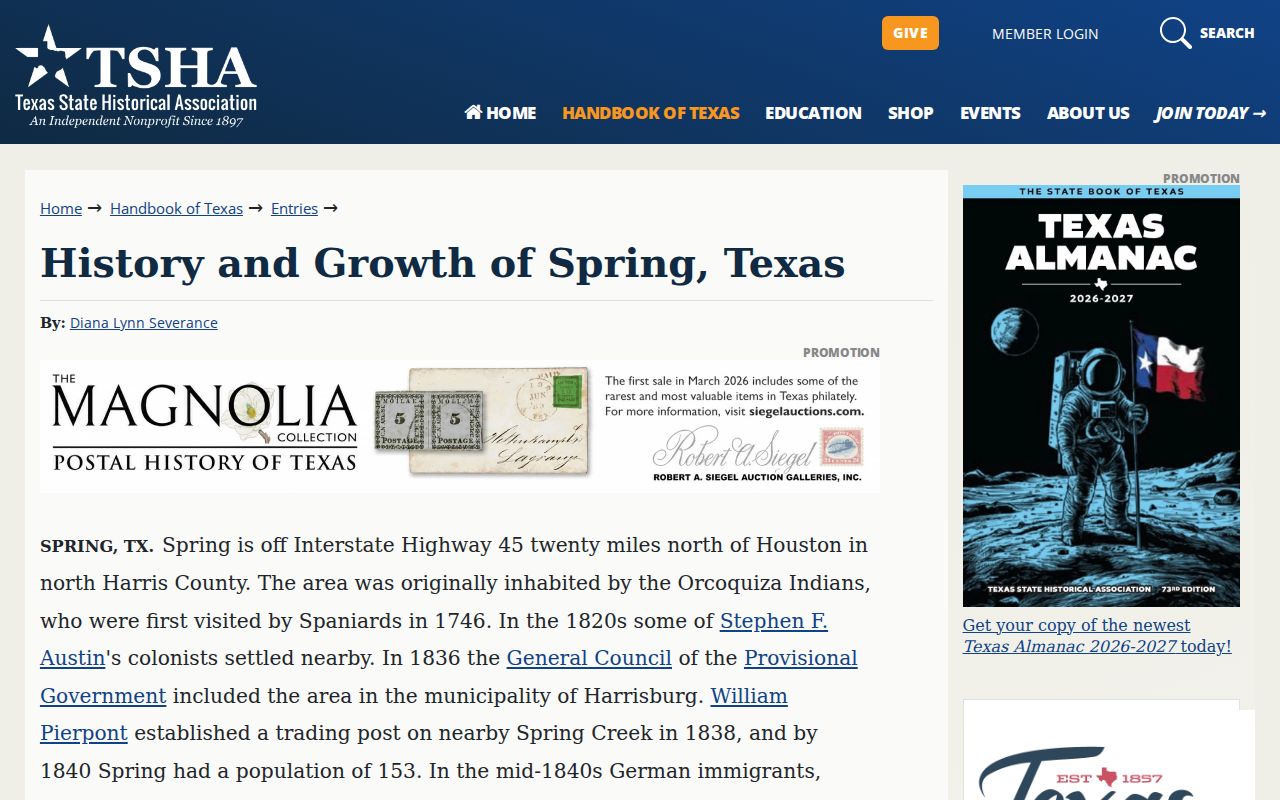
Use the chronology to choose records for the period, not to infer that a named rail worker or merchant occupied a particular parcel.
Spring Previous Residents Limits
A complete history can still have blank years. Deed images before the online cutoff may require office or microfilm access. The research notes missing District Court criminal-minute volumes and historic custody issues, which are gaps in the surviving record, not gaps to fill with assumptions. Houston volumes may omit a Spring address, and a postal label may cross the Harris County boundary. Keep a search log that identifies the source, date searched, terms used, result, and access limit.
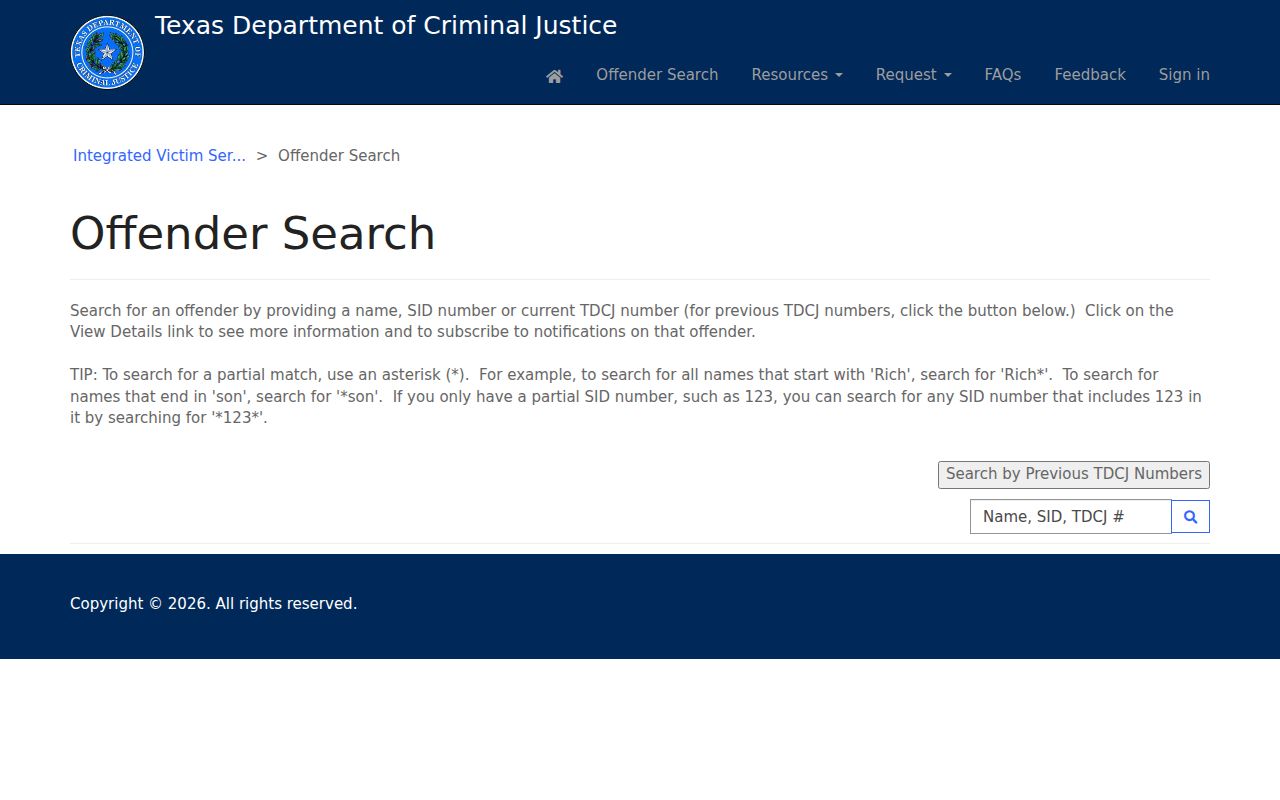
The Texas Department of Criminal Justice offender search is a separate state custody locator with its own time limits. It does not supply a home history or establish who lived at a Spring address.
A careful conclusion names the source and its limit. It does not turn an unlocated volume, an index role, or an unrelated status record into a claim about a past household.
Lawful use. Use Spring address history for family history, house history, or personal research. Do not use a name or address trail to stalk, harass, or harm anyone.