
Finding Spring Resident Records
Spring records do not sit in a city clerk's resident roll. The Texas State Historical Association describes Spring as an unincorporated Harris County community and Census-designated place. A Spring mailing address can also lead toward Montgomery County. That makes address matching the first task. Confirm the delivery address with USPS, identify the county parcel, and keep the situs address separate from a mailing address. Harris Central Appraisal District, known as HCAD, covers Harris County parcels only. If an apparent Spring address is absent there, that is a reason to test the Montgomery County route, not proof that no record exists.
The best starting point depends on the question. An owner or parcel question belongs with HCAD and the Harris County Clerk deed index. A registration question belongs with the Harris voter lookup. A court, vital, or directory record has its own custodian and access rule. None of those sources lists every person at an address. A taxpayer, a deed grantee, a registered voter, and a directory entry are separate dated clues.
- Normalize the street address and confirm the county and ZIP.
- Search HCAD by address, owner, or legal description for a Harris County parcel.
- Use the Clerk index to connect the parcel to recorded deed parties.
- Check a narrow voter, court, or vital source only for the question it can answer.
- For older households, move to library directories, microfilm, newspapers, and archives.
Spring Residents Record Custodians
Three Harris County offices form the practical core for a Spring address on the Harris side. HCAD maintains appraisal accounts and parcel details. The County Clerk maintains the real-property index and copy routes. Harris Elections maintains a limited voter lookup and handles written public-information requests. Their records overlap without becoming a master residents directory. The Clerk also routes personal records, while the District Clerk, Justice of the Peace courts, and Texas vital-record offices hold other kinds of name-indexed material.
Harris County Clerk, Real Property
201 Caroline, Suite 320
Houston, TX 77002
713-274-8680
Harris Central Appraisal District
13013 Northwest Freeway
Houston, TX 77040
713-957-7800
Counter, mail, and request routes matter when a public interface ends. The Clerk accepts real-property copy requests and lists both central and annex access. Archives research is by appointment. A Texas Public Information Act request should seek existing records from a named custodian, specify a date range or file number, and ask for inspection or copies. The law does not require an office to create a new list or answer an open-ended person question.
HCAD Clues for Spring Residents
HCAD's advanced property search offers a careful way to anchor a current Harris-side address. Its fields include owner name, legal description, property street name, beginning and ending street numbers, ZIP, key map, map facet, school district, neighborhood number, and value filters. The general search uses partial, case-insensitive terms; it is not a title search. A parcel detail can show an account number, owner, situs, mailing address, legal description, values, exemptions, land and improvement data, sketch, map, and ownership-history links.
| HCAD field | Use for a Spring search | Important limit |
|---|---|---|
| Owner name | Locate an appraisal account | Does not identify every occupant |
| Street range | Review parcels on part of a road | Match direction and unit carefully |
| Legal description | Connect a parcel to a subdivision or tract | Older deeds may use another form |
| ZIP | Narrow Harris County parcel results | Postal ZIP is not a county boundary |
HCAD search help says current-year information generally refreshes nightly and advises allowing time for corrections to appear online. The district disclaims title determination. Treat the account as a timestamped appraisal clue, then use a recorded instrument or another source to test the conclusion.
See the HCAD advanced form below before choosing a field combination.
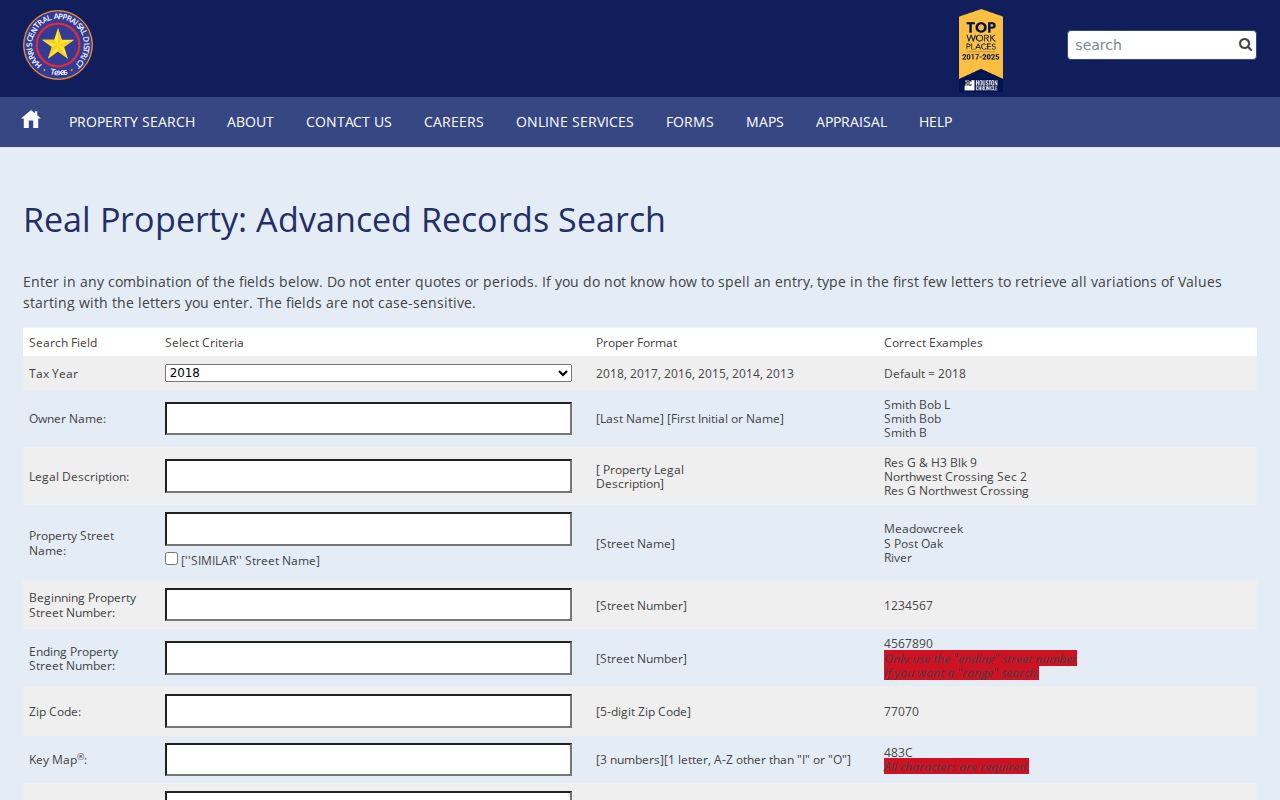
The form illustrates why a street, number range, and legal description can be more useful than a broad name search.
Spring Deed Index Trail
The Harris County Clerk's real-property index turns a current parcel clue into a recorded transaction trail. Search by grantor or grantee name, date range, subdivision or description, volume and page, or components such as lot, block, unit, abstract, tract, and reserve. Name fields expect last name first with no punctuation. The index is free to search. It records parties to an instrument, recording information, and legal-description clues. A grantor or grantee is not automatically a current resident.
The portal notes that images are available from November 1, 1960. Indexing can lag recording by one to two business days, and unwatermarked images or copies can require account or payment routes. Older deed books, direct and reverse indexes, office records, Texas State Library and Archives Commission microfilm, and Harris County Archives are the documented fallbacks. The Clerk's pre-1961 indexing work is useful but still a reason to preserve book, volume, film, and legal-description details.
Use the Clerk records search as a record lead, then request a certified copy from the custodian when one is required.
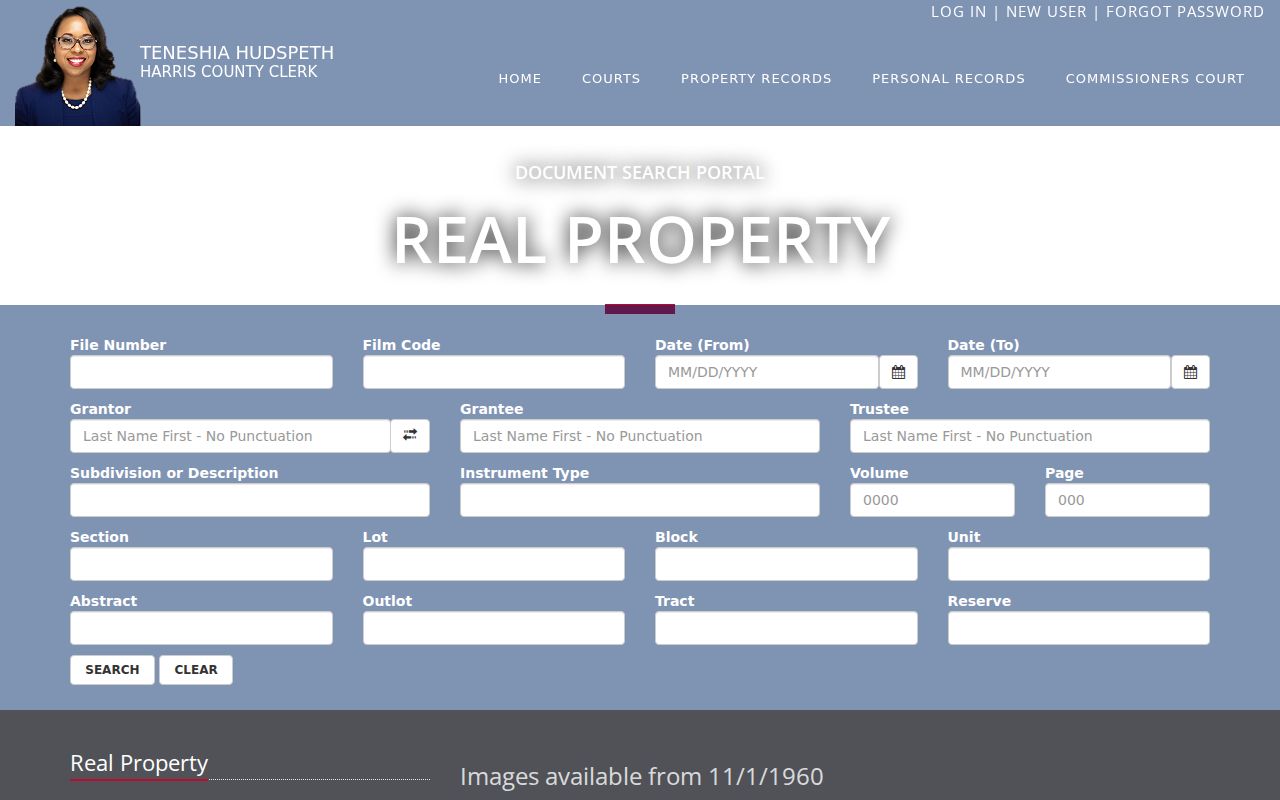
The captured Clerk search screen shows the real-property search route used to document an instrument rather than infer an occupant.
Current Spring Residents Directories
Current records work best as a comparison set. The property roll identifies an appraisal owner and its mailing information. A voter tool can confirm a current or pending registration, subject to suppression and status limits. The deed index identifies people attached to recorded instruments. Association databases identify an association or its certificate filing, not its members. These sources should be dated and matched to the same address or name variant before they are used together.
| Record layer | What it can show | Custodian | Access path |
|---|---|---|---|
| HCAD account | Owner, parcel, situs, mailing details | HCAD | Free web search and office |
| Voter registration | Current or pending registration result | Harris County | Web lookup or records request |
| Recorded instrument | Grantor, grantee, date, legal description | County Clerk | Index, copies, mail, counter |
| Association certificate | Association identity and filing clues | Texas management-certificate search | State search, not a member list |
For a name-first check, the Spring resident lookup route separates ownership, court, vital, and historical evidence. A record that fails to match the county or date is a lead to resolve, not a reason to attach it to a person.
Question: Does a voter result prove someone lives at the address today? No. Registration can be pending, suspense, protected, or tied to a different mailing situation. It is a registration clue only.
Texas Voter Rules for Spring
The Harris County voter search lets a user choose current or pending registrations and search by name or address. For an address, the county asks users to enter a directional street form without a period, such as S Sam Houston. The result is not a complete block census. A person may have a different mailing address, a protected address, or a record outside the expected ZIP.
Texas makes some voter information public, including name, date of birth, voter unique identifier, and participation history, but it does not disclose how a person voted. Social Security, driver-license, phone, and protected-address information are restricted. Protected classes and eligible survivors may use confidentiality programs. A public display can show asterisks instead of an address. Harris also offers a form that removes personal information from its website without erasing the underlying record.
For a documented voter-file request, Harris Elections accepts written requests and offers in-person inspection. The statewide Secretary of State form has a notarized affidavit, a $75 deposit, permitted reductions, and a stated 15-day furnishing rule. It is a formal records route, not a shortcut around privacy protections.
Review the Harris lookup controls before selecting name or address.
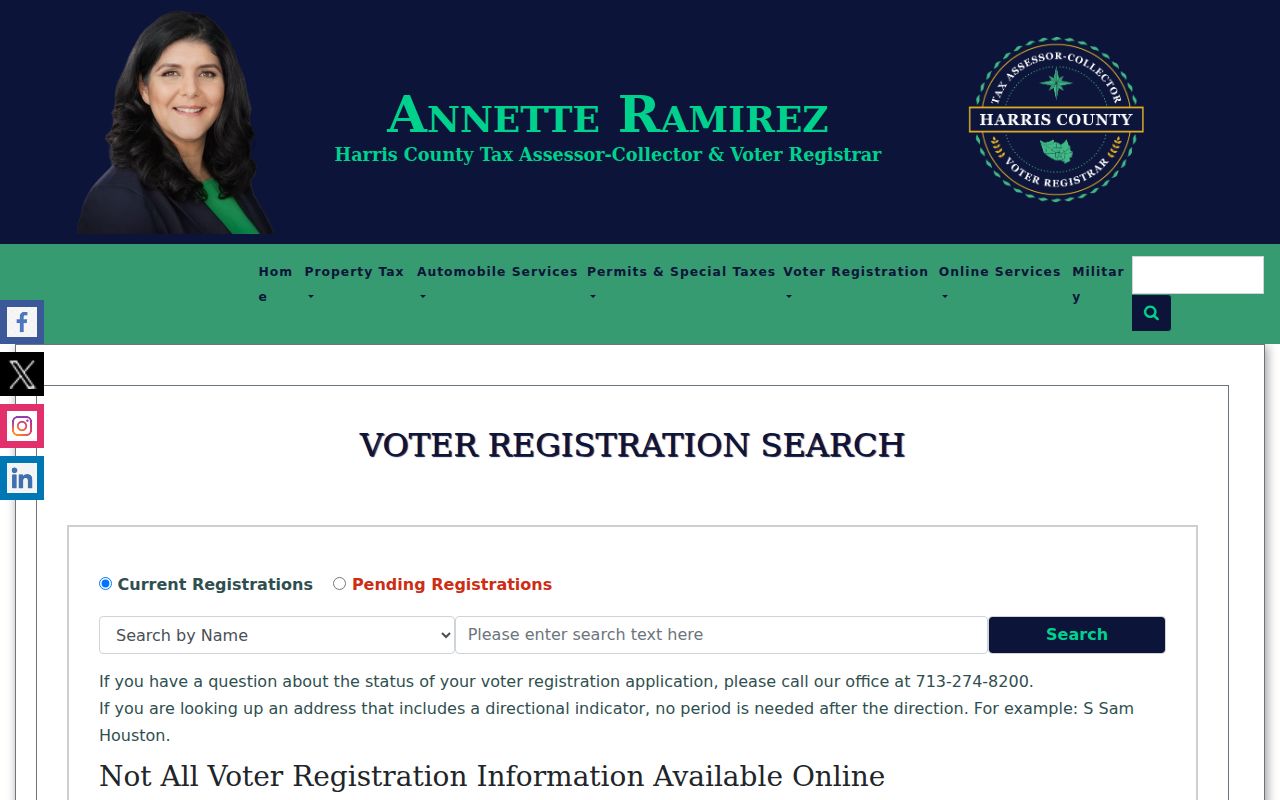
The interface separates current and pending registrations, a reminder to record the status returned with any search.
Spring Court and Vital Checks
Name verification sometimes requires a court or vital-record route, but neither serves as a resident list. Harris County District Clerk eDocs has civil, family, criminal, and public-information areas, with registration or login for modern public case information. Party, role, filed-date, status, court type, and case-type filters can narrow a search. Historical civil and criminal materials have an appointment-only document-room route, and Texas State Library microfilm supplements old records. Justice of the Peace cases, Houston Municipal Court records, and federal PACER cases each have separate jurisdiction.
Texas vital rules differ by record. Birth information becomes public after 75 years and death information after 25 years. The state maintains marriage and divorce verification indexes from 1966 and 1968, but it does not issue the certified marriage license or divorce decree. Restricted certificates require a qualified applicant or direct tangible interest. Harris County or the appropriate issuing office may hold the certified original. A date, county, and exact name are safer starting details than a broad search.
Use the Texas vital applications hub for current forms and the named custodian for the certificate type needed.
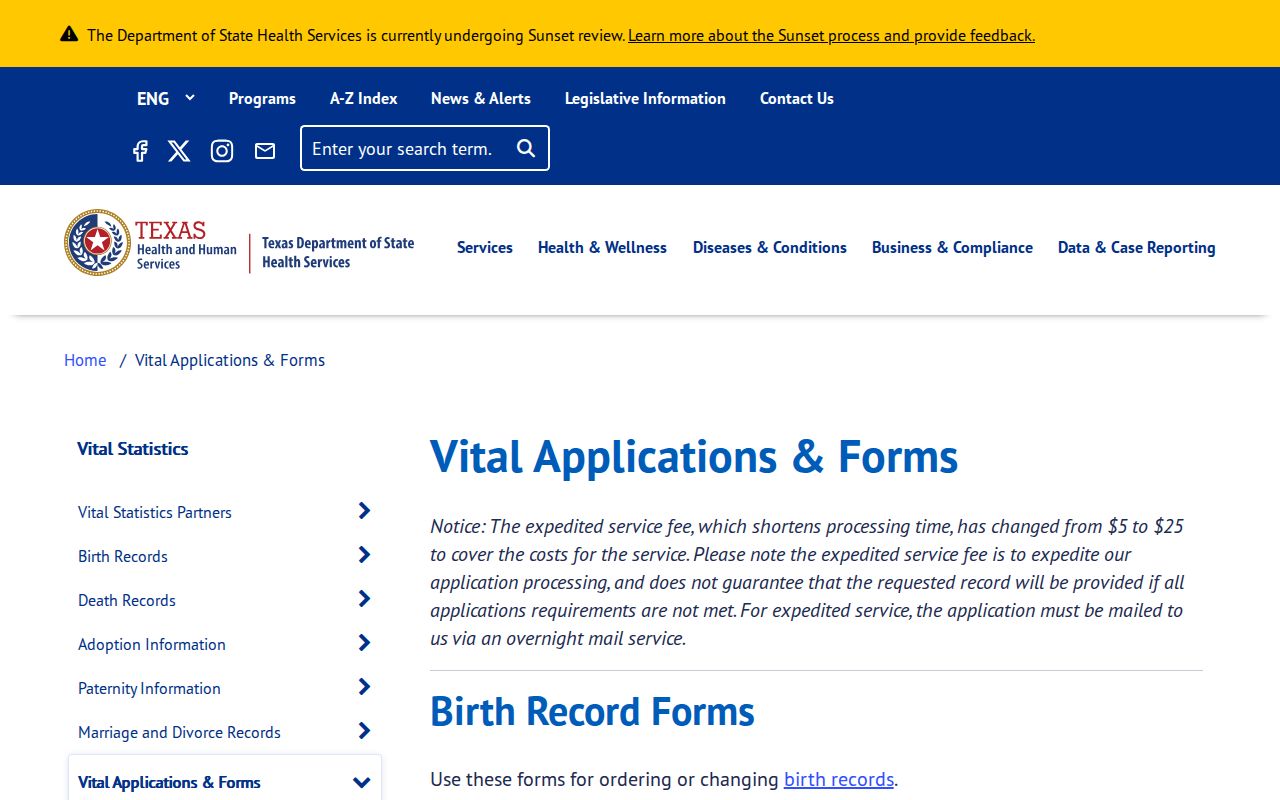
The state application hub separates birth, death, marriage, and divorce paths instead of treating them as one searchable file.
Spring ZIP and County Boundaries
Spring has more than one postal story. The Texas postal reference associates 77373, 77379, 77380, 77381, 77382, 77383, 77386, 77387, 77388, 77389, and 77391 with Spring. Those ZIPs do not draw the Census-designated place boundary or the Harris County line. A Spring 77386 address can require Montgomery County records, while a 77388 address is a Harris-side clue that still needs parcel confirmation. USPS decides delivery addressing, not deeds, appraisal jurisdiction, school districts, MUDs, or courts.
HCAD's ZIP field helps narrow a Harris County parcel search. It cannot prove that every result belongs in the Spring CDP or that every person listed has a Spring residence. Census TIGERweb and QuickFacts describe geography and population context, not household lists. The practical sequence is USPS normalization, county parcel search, legal-description check, and then the appropriate county clerk.
For the full postal comparison, use the Spring ZIP code directory.
Historical Spring Directory Evidence
There is no confirmed continuous Spring-only city-directory run in the official collections examined. That gap matters. Spring began as a railroad village and postal place rather than an incorporated city with a steady municipal directory. Houston-area volumes, county material, newspapers, and archival collections can still provide strong local clues, but an entry in a Houston directory should never be silently converted into a Spring address.
Houston Public Library offers free scans of Houston city directories from 1866 through 1923. Its physical holdings and the Texas State Library hold later Houston runs, while criss-cross directories can reverse an address to a household or phone listing. Clayton Family History Research Center adds newspapers, funeral-home material, local-history collections, and staff research limits. Record the edition, page, section, spelling, and year. Compare it with the 1950 Census, a deed, an obituary, or an archive source before drawing a household conclusion.
Browse HPL's digitized city directories for the early open scans. The Harris County Clerk records search is the companion route for a parcel or instrument clue.

County records are a useful companion when a historical directory entry gives a name but no reliable parcel match.
Spring Railroad-Era Record Gaps
Spring's record trail does not grow in a smooth line. The community gained Houston and Great Northern Railroad service in 1871, became a rail center after the 1901 to 1903 connection, and saw the roundhouse move to Houston in 1923. Population changed with that history. A thin early directory result may reflect a small railroad and postal community, a rural route, a different publication scope, or a missing edition. It does not establish that a family was absent from Spring.
For the older trail, combine Texas State Historical Association context with Harris deed, probate, court, survey, newspaper, census, and archive collections. The Harris County Archives holds permanent records from more than 70 county offices and accepts research by appointment. TSLAC lists Harris deed and court microfilm, including older direct and reverse indexes. Preserve an exact reel, volume, or book reference for a later counter, library, or archive request.
Note: The District Clerk and TSLAC identify missing historical criminal-minute volumes, so a gap in a volume is a custody fact, not evidence about an individual.
Spring Public Records Request Route
When a useful index is not online, start with the office that keeps the original. The Texas Public Information Act, Government Code chapter 552, supports a written request for existing public records. Name the custodian, identify a narrow record set, add the relevant address, legal description, file number, person name, or date range, and say whether inspection or copies are preferred. The Attorney General says no reason is required, but the request should not ask an office to create a new report or perform a broad investigation.
The agency should provide records promptly. If it cannot do so within 10 business days, it should communicate when they will be available or explain the delay. Costs may require an itemized estimate, and larger requests can require a deposit. The Clerk, Elections, District Clerk, archives, HPL, TSLAC, and the appropriate city office all provide different fallback paths. A Houston municipal request applies only when jurisdiction actually points to Houston.
See the Texas Public Information Act overview before submitting a request.
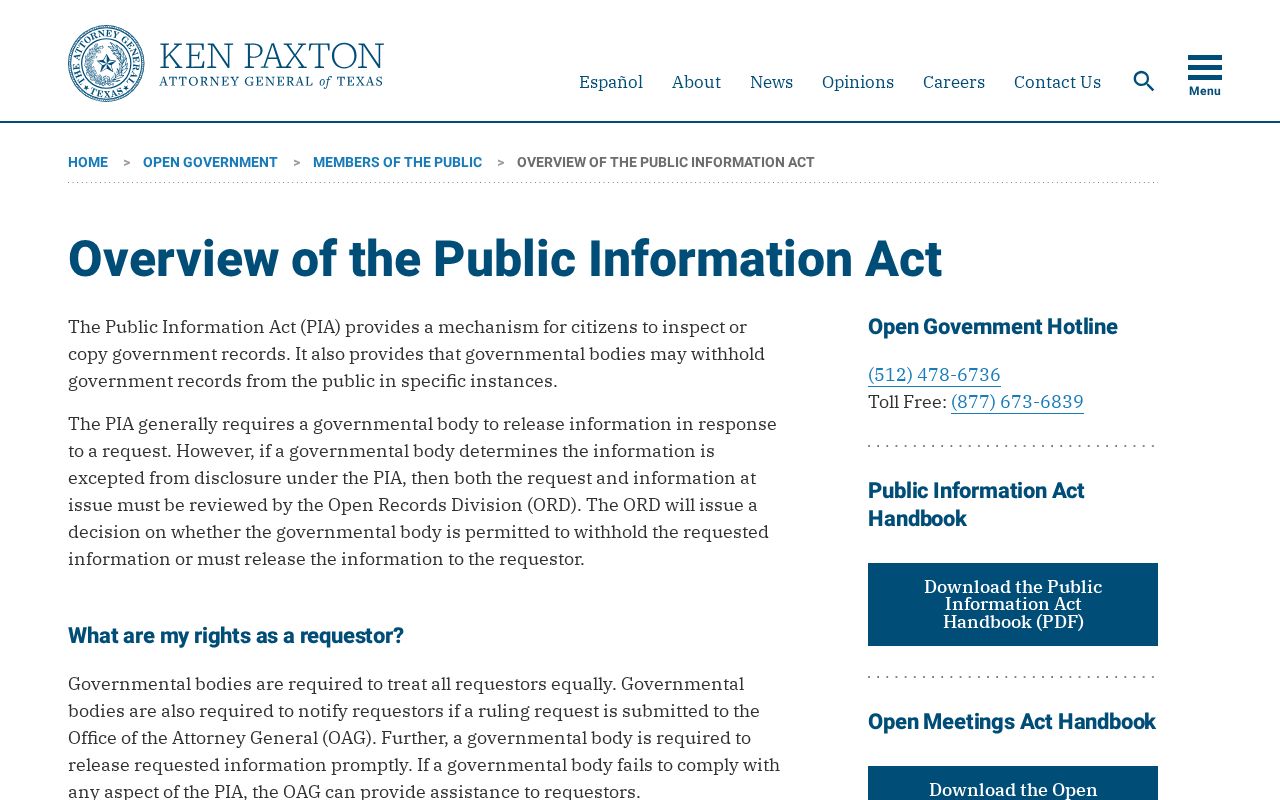
The Attorney General's overview is the starting point for a scoped request after the correct custodian has been identified.
Spring Elections Request Access
Harris Elections offers more than a web lookup. Written public-information requests can be sent to the Harris County Clerk Elections Department, and the office provides an in-person inspection route. Its guidance asks requesters to describe the record and notes that inspection is free, while estimates can apply above $40 and deposits above $100. That route is useful only for existing, releasable records. It does not defeat address confidentiality or turn a registration file into proof of residence.
Keep a request narrow. An address, status, election date, or named file field helps the office route it. For statewide data, use the Texas Secretary of State's prescribed request and affidavit instead of assuming the county website contains the master file. Public data has practical and legal limits, especially for protected address information.
Harris Elections explains its formal request route at the source below.
The request guidance helps distinguish a custodian request from a routine name or address lookup.
Spring Residents Directory History
Historical evidence works best when each source retains its own meaning. A city directory is a published snapshot. A deed is a recorded property transaction. A census is a household snapshot. An obituary reports an event. HCAD is an appraisal account. When the dates agree, the records can strengthen each other. When they conflict, preserve the conflict and check the original edition, instrument, or index instead of forcing a match.
HPL's address-search service is limited to approximately one address in five selected years, or two addresses in two or three years by email, with a monthly request limit. That measured service can be a good next step when a volume is not digitized. Older Harris deed books, TSLAC microfilm, and Archives title materials can bridge an address change. The Spring directory book route has the collection years, reading method, and access limits in detail.