
Spring Resident Lookup Evidence Map
Build a candidate record instead of accepting one search hit as an identity. Spring is an unincorporated Harris County community, but its popular mailing area can reach Montgomery County. For a Harris County address, begin by normalizing the street line and confirming the parcel. HCAD, the county clerk, courts, voter registration, and vital offices each keep a different slice of information. The useful result is a set of matches and limits, not a single speculative profile.
| Record | What It Confirms | Where | Access |
|---|---|---|---|
| Property appraisal | Taxpayer or owner, parcel, situs, and mailing fields | HCAD advanced search | Public online, by phone, and in person |
| Recorded deed | Named grantor or grantee and legal description | Harris County Clerk real-property index | Free index; images and copies have separate routes |
| Court index | Public case involvement, role, and status | Harris County District Clerk eDocs or the court with jurisdiction | Modern case information follows portal and document limits |
| Voter registration | A public registration record, if displayed | Harris County Tax Office voter search | Current or pending lookup, subject to suppression |
| Vital index | A qualifying event or state verification | Texas DSHS and issuing county offices | Index and certificate access differ by record and eligibility |
HCAD is an ownership layer, not an occupant roster. A deed can name a party without proving where that person lives now. Use the property record to anchor the correct parcel, then choose a court, voter, vital, credential, or entity source only for the specific question it can answer. A Montgomery County parcel needs Montgomery records, not a Harris County result stretched across the county line.
Confirming a Spring Parcel First
HCAD searches by owner, street, account, legal description, ZIP, and other parcel filters. A parcel detail can show an account number, owner name, physical situs, owner mailing address, legal description, neighborhood, values, exemptions, a sketch, and ownership-history links. The situs is the physical parcel address. The mailing field is where notices go, and may be in another city or belong to a trust or representative. That distinction matters in a Spring resident lookup.
- Parcel
- A tax and map account for a piece of land, not a list of people living there.
- Situs address
- The physical location of the parcel used by the appraisal record.
- Legal description
- The subdivision, lot, block, tract, or similar land description used to connect an appraisal account to a recorded instrument.
HCAD says public data is not a title opinion, and its parcel map is approximate rather than a survey. Current-year records usually refresh nightly, but a change can take about three days to appear online. Compare a candidate against the recorded grantee and date before treating an appraisal name as reliable ownership evidence.
For the current court interface, the District Clerk eDocs search shows the Spring resident lookup route for public Harris County cases.
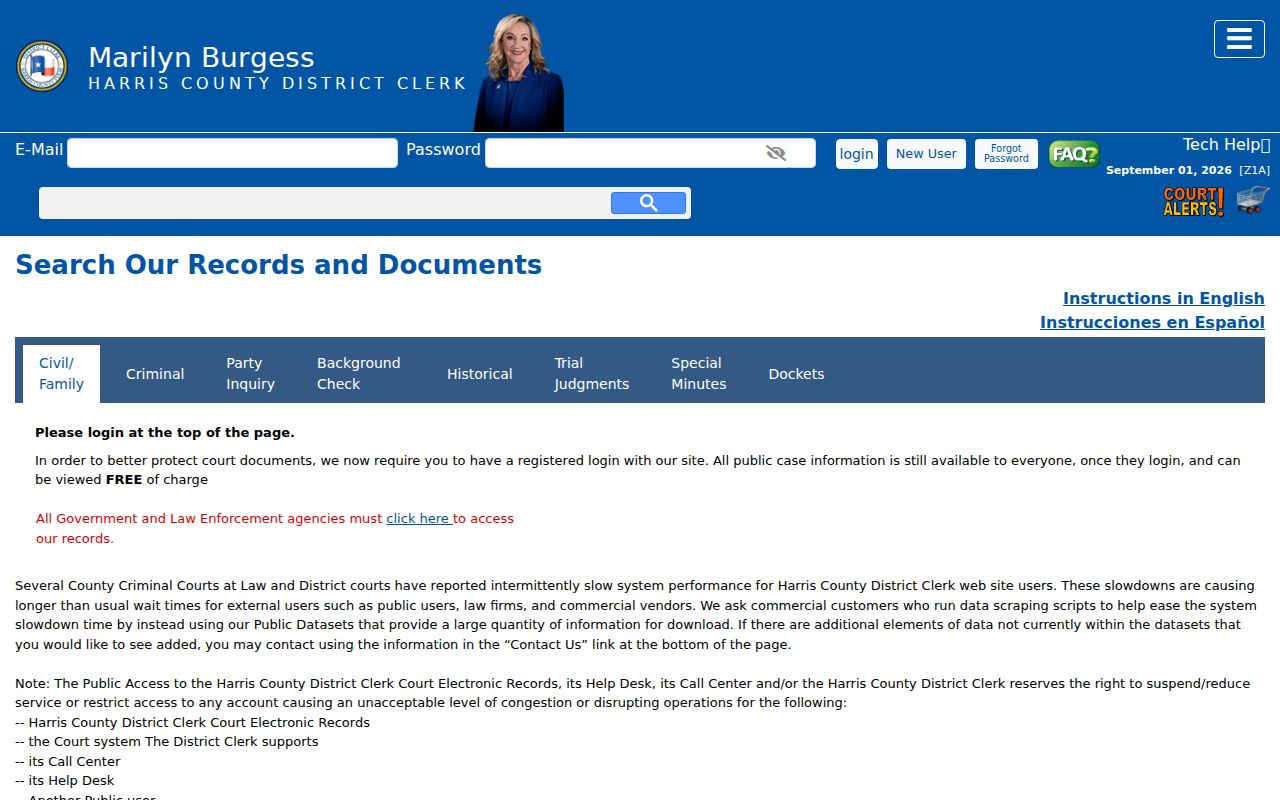
The account-login notice is a reminder that a public case index and access to every document are different things.
Note: Save the account number and legal description with the result so similarly named people are not merged into one candidate.
Spring Resident Lookup Court Fields
The District Clerk eDocs party search has civil/family and criminal/public-information areas. Search by last name plus first name, and use a filed-date range, party role, case status, court type, and case or offense type to narrow a common name. Help instructions say a case number has no dashes, slashes, or spaces. They also note that a Starts With search is faster than Contains. A separate paid route carries an additional five-dollar fee.
| District Clerk field | Use in a Spring name search |
|---|---|
| Party Name | Enter a last name with first name, such as Doe, Jane, then compare spelling variants. |
| Party Role | Reduce a result set by the party role when that context is known. |
| Filed Date From / To | Use MM/DD/YYYY dates to reduce an overly broad name search. |
| Court Type and Case Type | Choose the jurisdictional category, then the available case or offense category. |
| Case Status | Use status as a filter, not as proof that a matching party is the person sought. |
A public result may show case number, case title and party names, party role, filing date, court and case type, status, docket events, costs, documents, assigned court or file location, and a disposition when posted. Record those fields as an index lead. Protected family materials, sealed matters, and unavailable images are not negative proof.
The Harris JP Find My Case search is a separate route for justice court matters.
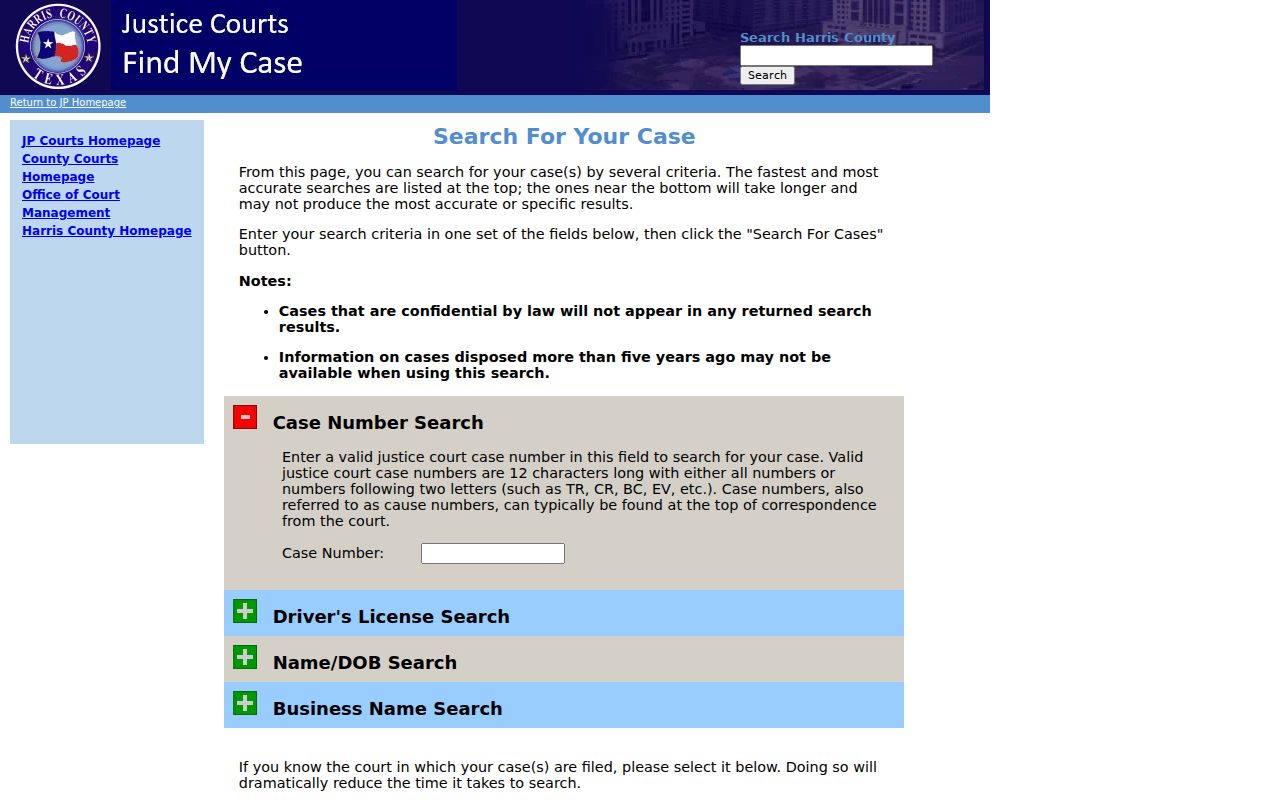
JP search accepts case number, name and date of birth, driver-license number, or business name under the portal's rules, so it should not be treated as a District Clerk substitute.
Spring Resident Lookup Court Routes
Choose the court before using a person’s name. The District Clerk covers its own public case categories. Harris JP cases use their distinct portal, and Houston Municipal Court records are a city route only when the address or record belongs to Houston. For federal matters, the Southern District of Texas Houston Division is the relevant division. PACER searches federal cases after registration, while the free McVCIS phone service can return a case number, parties, filing date, status, judge, events, and dispositions without documents.
The Houston Municipal Courts public-information page identifies the separate municipal channel.
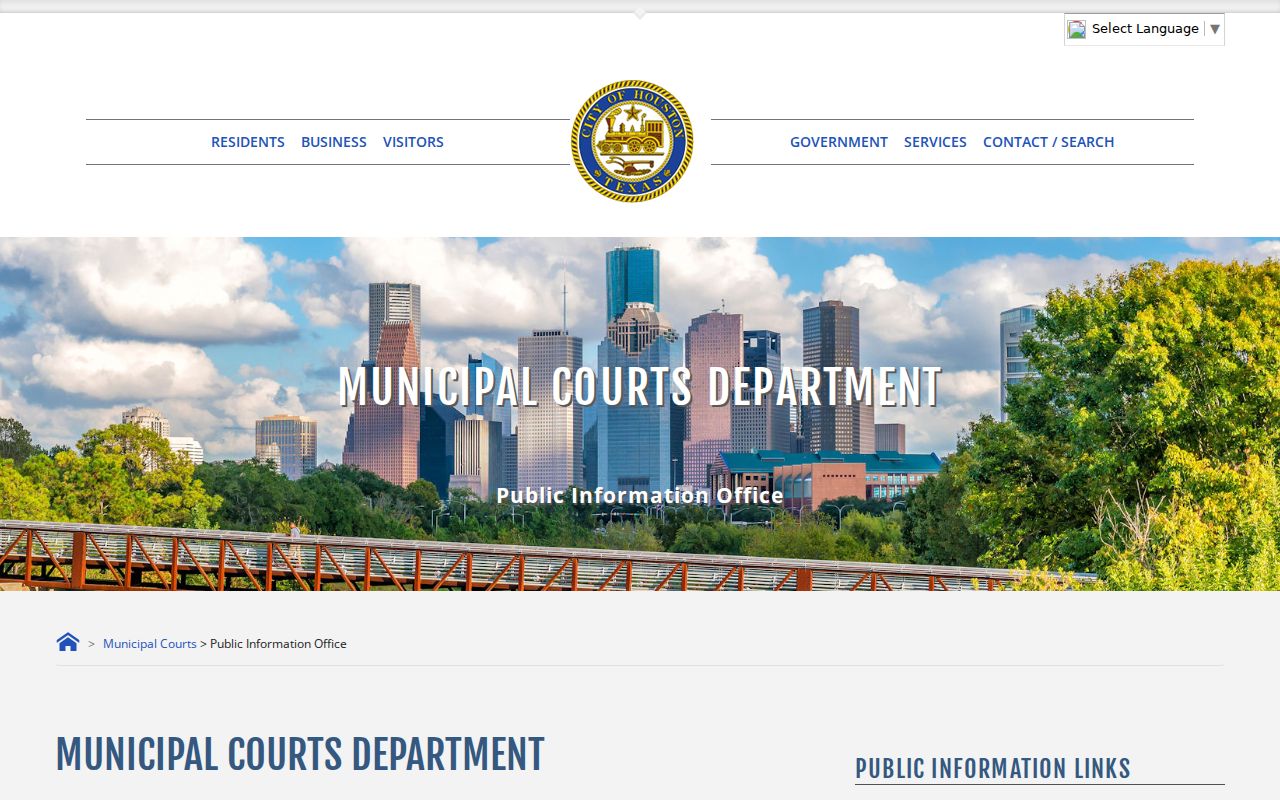
A municipal record does not replace a Harris County court search, especially where Spring’s mailing area crosses governmental boundaries.
For historical Harris court material, the District Clerk Historical Document Room has indexes and selected records from 1837 to 1951 by appointment. TSLAC microfilm provides another route, though some criminal-minute volumes are missing. A gap should remain a gap, rather than becoming an assumption about a person.
Vital Records for Spring Names
Texas DSHS separates public indexes and verifications from restricted certificates. Birth records become public after 75 years and death records after 25 years under Texas Government Code §552.115. The state marriage index begins in 1966 and the divorce index begins in 1968. A state verification does not replace the certified marriage license from the issuing county clerk or the certified divorce decree from the district clerk that handled the case.
Restricted birth and recent death certificates require an eligible applicant or direct tangible interest, plus the required identification and request materials. DSHS supplies forms, phone, mail, and in-person channels. Harris County Clerk duties can also apply to local birth and death records outside specified city and justice-of-the-peace exceptions, so the event jurisdiction must be checked before ordering.
The DSHS eligibility guidance explains who may request or change a vital record.
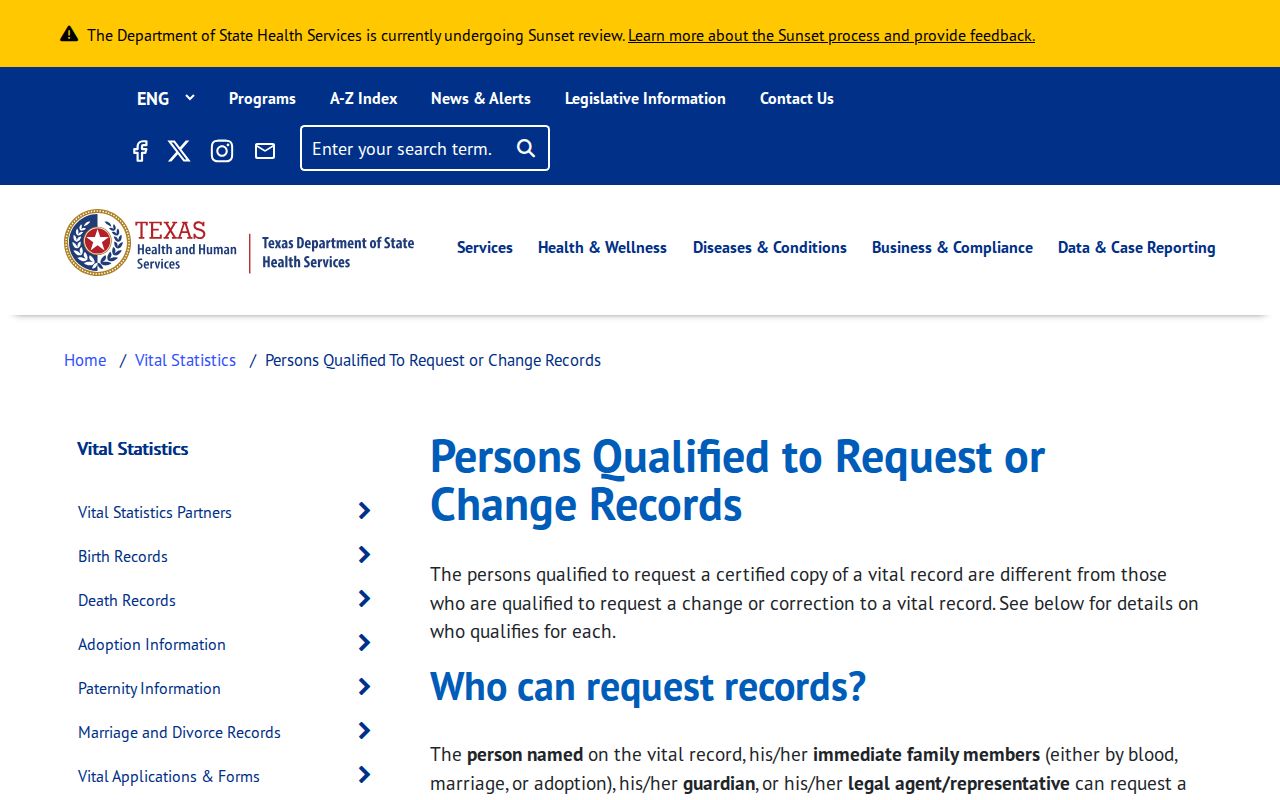
Eligibility rules are part of the record, not a technicality to work around when a certificate is restricted.
The Texas vital-record request procedures provide the public-index and request-channel details.
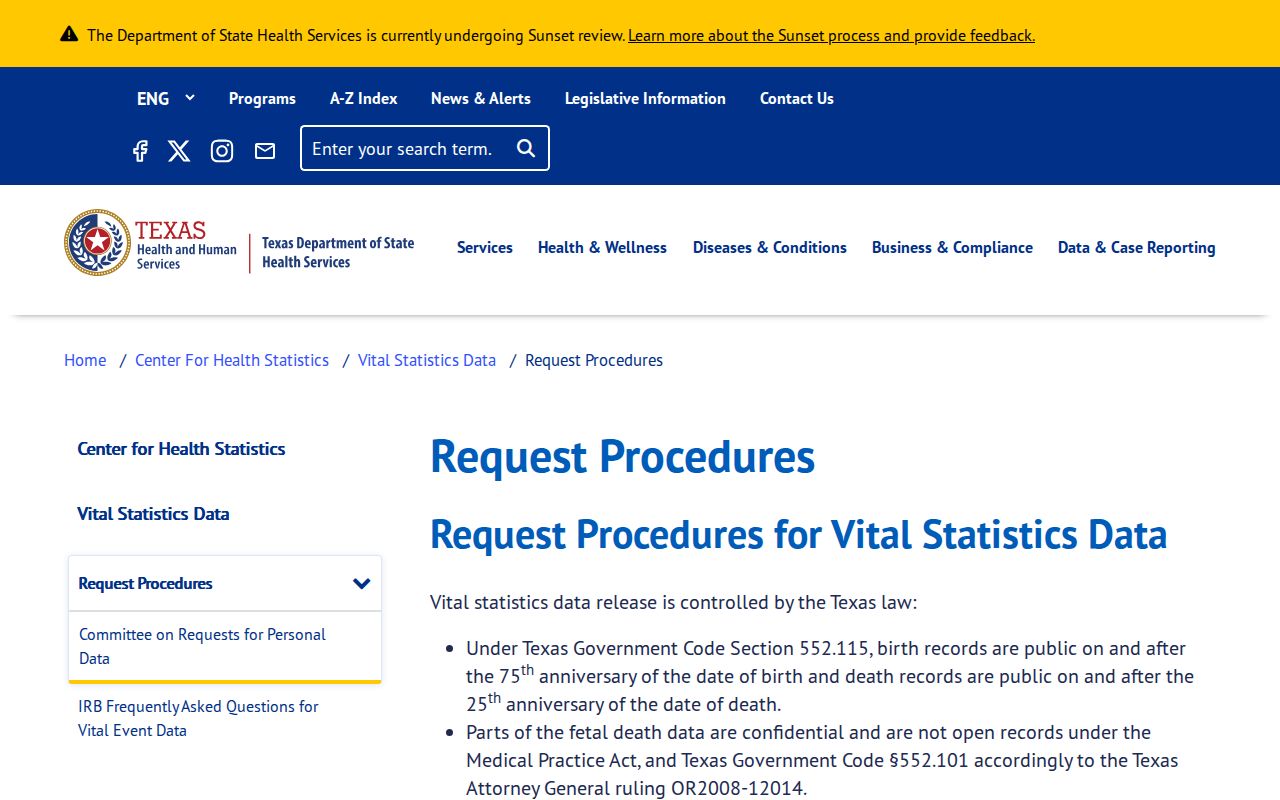
Use a vital index to verify an event, then ask the correct custodian for an authorized original when that is genuinely needed.
Historical Spring Resident Clues
When a current record ends, switch to historical collections rather than forcing a present-day conclusion. Clayton Family History Research Center and Houston Public Library provide genealogy material, newspaper archives, funeral-home collections, directories, and other local-history holdings. Houston city-directory scans cover 1866 through 1923, but no continuous Spring-only directory run was confirmed. Check whether a Houston or Greater Houston volume actually includes the Spring postal area before treating an entry as local.
A reverse or criss-cross directory works from an address back to an entry. HPL and Houston History Research Center hold criss-cross volumes of various titles and publishers from 1925 onward, but exact Spring coverage has not been confirmed. For a person found in an older volume, preserve the edition, year, page, and printed abbreviations. That creates a useful lead for a deed, obituary, census, or probate search without claiming a modern address.
For deeper address history, the Spring Directory Book identifies the library and archive routes. Note: A historical directory entry is a date-stamped clue, not proof that a person remains at that address.
Verifying a Spring Resident Across Records
Use a short, repeatable sequence. It keeps ownership, registration, court, and event evidence in their proper lanes. A common surname calls for a candidate table with evidence for and evidence against, not an asserted identity. Preserve a suffix, former name, maiden name, middle initial, party role, street, subdivision, and deed date only when the relevant record lawfully displays them.
- Normalize the street line and ZIP, then confirm whether the parcel is in Harris or Montgomery County.
- Search HCAD by owner, address, and legal description separately. Save the account, situs, mailing field, and map context.
- Search the Harris Clerk by grantee or grantor with the legal description. A matching instrument is stronger ownership evidence than a name-only match.
- Use the court with jurisdiction, then compare party role, date range, and case number rather than repeating sensitive allegations.
- Use voter and vital indexes only for their narrow questions, and seek certified copies from the proper custodian when access rules allow.
- Docket
- The dated list of actions in a court case.
- Index versus image
- An index points to a record; an image is the document view, which may be limited, redacted, or available through a paid copy route.
- Certified copy
- A custodian-issued copy carrying the office certification required for an official purpose.
Spring Address Suppression Rules
The Harris County voter search offers current or pending registration and a name or address choice. It is a registration tool, not a household census. Public name, date of birth, VUID, and participation information have different treatment from protected Social Security, driver-license, phone, and address fields. An address can be suppressed, a record can be pending or in suspense, and a registration may use a mailing address.
Texas programs protect certain judges, peace officers, families, and eligible victims. Election Code §13.004 can replace a residential address with asterisks, while the Attorney General Address Confidentiality Program uses a substitute post-office box and confidential voter handling for eligible participants. Ask the custodian about a redacted record or correction. Do not attempt to reconstruct information a program has withheld.
Resident Lookup Limits in Spring
License and entity filings can confirm a credential or a listed business role, but neither proves a Spring residence. The TDLR verification search and other Texas board searches should be used for license type, number, status, and public details tied to that board. Texas Online Professional Profiles also separates a profession from name, city, state, and ZIP filters. SOSDirect can show a filing role only where that filing includes one, and it requires an account with a one-dollar search charge. Keep those limited facts separate from address evidence.
The same caution applies to custody and registry records: they are dated record categories, not a way to establish a present address. Use the smallest record set that answers the question, and report uncertainty when records disagree. For records not available through a public screen, the Texas Public Information Act permits a written request for existing records without stating a reason. The custodian may provide records promptly, issue a delay notice within 10 business days, or give a cost estimate or deposit request for larger work. Ask for an existing index, verification, or redacted record. Do not ask an office to create a new conclusion about a person.
For a named street rather than one candidate, the Spring Street Directory keeps the address-led record chain separate. That division helps prevent a property owner, a mailing recipient, and an occupant clue from being treated as the same evidence.